Back
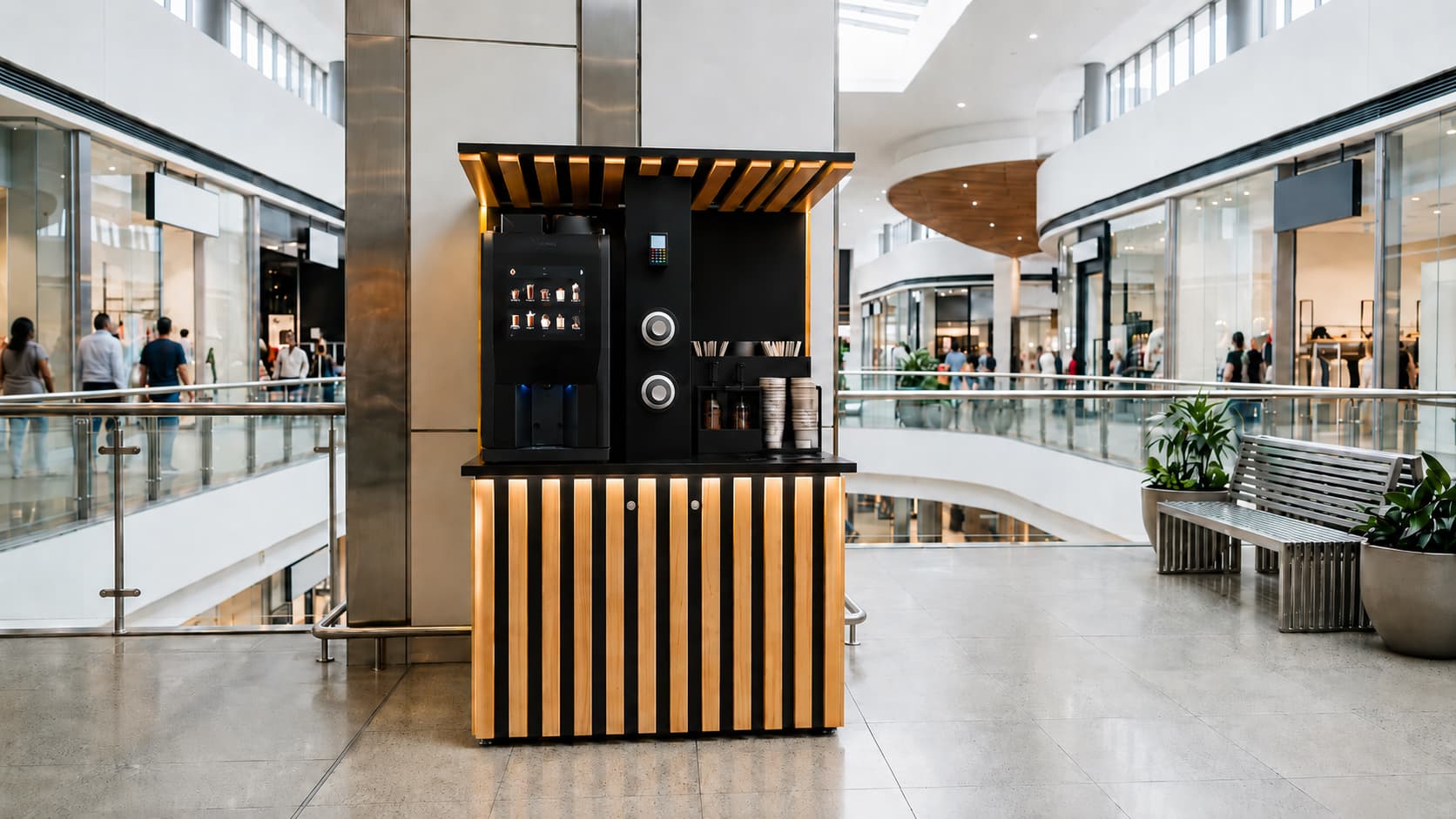
Automated Coffee Kiosks in Shopping Malls: A High-Traffic Revenue Model
Discover how high-traffic mall locations can drive strong daily volume and revenue for smart coffee kiosks.
Shopping malls remain one of the most promising environments for automated coffee businesses in 2026. With millions of visitors passing through major retail centers daily, these high-traffic locations offer significant potential for consistent revenue when the right system is placed strategically.
From our extensive experience supporting investors in commercial deployments, malls present unique advantages: heavy foot traffic, extended operating hours, and strong impulse buying behavior. However, success depends heavily on understanding mall dynamics, optimal placement, and the specific performance characteristics of smart coffee kiosks in retail environments.
This guide examines how automated coffee kiosks perform in shopping malls, the key factors that drive revenue, and practical strategies for maximizing returns in these high-traffic retail spaces.
Why Shopping Malls Are Attractive for Automated Coffee Kiosks
Shopping malls generate substantial daily foot traffic, often ranging from 20,000 to over 100,000 visitors, depending on the size and location of the center. This creates a large pool of potential customers who are already in a spending mindset.
Key advantages of mall placements include:
Extended operating hours (typically 10–12 hours or more)
High volume of impulse purchases
Diverse customer demographics
Climate-controlled environment suitable for sensitive equipment
Unlike street-level retail, malls provide a captive, enclosed environment where people linger, making them ideal for convenient beverage solutions. Automated systems excel here because they can serve customers quickly without requiring staffed counters or large footprints.
To understand which specific locations within malls perform best, see our guide on best locations for starting a smart coffee bar.
Foot Traffic and Impulse Buying Dynamics
Foot traffic in shopping malls is not uniform. The highest-performing kiosk placements are usually found in:
Main corridors and walkways with heavy pedestrian flow
Near food courts or seating areas
Close to popular anchor stores or entertainment zones
Areas with natural gathering points (rest areas, escalators, entrances)
Impulse buying plays a major role. Shoppers in malls are often relaxed and more willing to make small discretionary purchases. A well-placed smart coffee kiosk can capture this behavior effectively, especially during peak shopping hours (weekends and evenings).
Real performance data shows that strategically placed kiosks in high-traffic mall zones can achieve 90–130 cups per day on average, significantly higher than many office or hospital locations during weekdays.
For insights into how these high-traffic environments fit into broader investment strategies, explore unattended retail opportunities.
Revenue Potential and Daily Volume in Malls
Revenue in mall placements is driven by volume rather than extremely high per-cup margins. With an average selling price of $4.00–$4.50 and strong daily throughput, these locations can deliver attractive returns.
Typical performance benchmarks:
Average daily volume: 90–130 cups
Peak days (weekends/holidays): 140–180+ cups
Monthly net profit range: $8,100 – $11,500 per kiosk in strong locations
Payback period: Often 4.5–7 months in well-placed mall spots
The combination of high foot traffic and impulse buying creates more volatile but potentially higher revenue compared to steady office environments. Weekend performance frequently compensates for slower weekdays.
To see how automation supports efficient scaling across different venue types, read our overview of automated food & beverage business opportunities.
Placement Strategy Within Shopping Malls
Success in malls depends heavily on a precise placement strategy.
The best spots are usually:
High-visibility areas with good pedestrian flow
Near seating or rest zones where people naturally pause
Locations with power access and minimal obstruction
Areas approved by mall management for vending-style units
Avoiding dead zones, low-traffic corners, or overly competitive food court areas is critical. The ideal spot balances visibility, accessibility, and minimal interference with existing tenant flow.
For practical guidance on building a scalable income through smart placement, review our guide on semi-passive coffee business ideas.
Operational Considerations in Retail Environments
Operating in shopping malls requires attention to several retail-specific factors:
Alignment with mall operating hours and peak periods
Compliance with mall rules regarding aesthetics and noise
Coordination with mall security and maintenance teams
Seasonal adjustments for holiday traffic spikes
Modern automated systems handle these demands well due to their compact size, quiet operation, and remote monitoring capabilities. This allows the business to run efficiently within the retail environment with very low daily owner involvement.
To understand why low-labour models are particularly effective in commercial settings, see our insights on low-labour business models.
Why Touch Coffee Performs Strongly in Mall Environments
Touch Coffee has optimized its smart coffee kiosks for high-traffic retail spaces like shopping malls. At Touch Coffee, you will find detailed specifications of the Standard and Premium models, real performance examples from retail placements, and tools to evaluate potential in mall environments.
The systems emphasize durability, attractive design suitable for retail spaces, fast transaction speed, and reliable remote management — all critical factors for success in busy shopping malls. For a forward-looking view of the unattended retail category, read our analysis of the unattended retail coffee business.
Mall Placement Performance Comparison
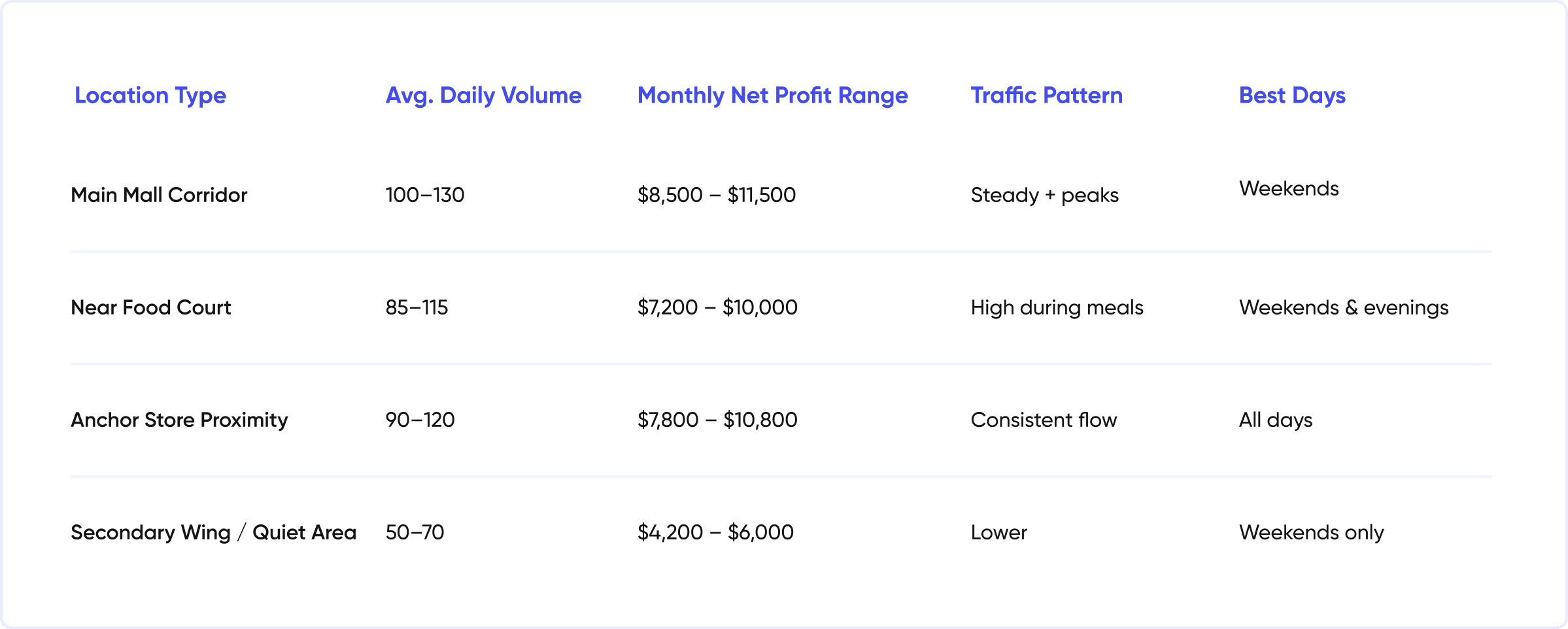
Strategic placement within the mall can make a substantial difference in performance.
Frequently Asked Questions
Are shopping malls good for automated coffee kiosks?
Yes. High foot traffic and impulse buying behavior make malls attractive when the kiosk is placed in high-visibility, high-flow areas.
What is the biggest challenge in mall placements?
Securing the right location and negotiating favorable terms with mall management are the most important factors for success.
How does weekend performance compare to weekdays?
Weekends and holidays typically deliver 40–70% higher volume than weekdays in most mall locations.
Can multiple kiosks be placed in the same mall?
Yes. Larger malls often support 2–4 well-spaced units without cannibalizing each other’s sales.
Automated coffee kiosks in shopping malls represent a high-traffic revenue model with significant potential for investors who prioritize strategic placement and operational efficiency. When positioned correctly in high-flow retail environments, these systems can deliver strong daily volume and attractive returns with low daily maintenance.
If you are a serious investor evaluating high-potential commercial opportunities, we invite you to explore how this model could work for you.