Back
Smart Coffee Machine Maintenance: Keeping Your Business Running 24/7
Learn smart coffee machine maintenance best practices for 2026. Discover daily upkeep, cleaning routines, downtime reduction, servicing schedules, and performance optimization to keep your automated coffee business profitable with minimal effort.
In the unattended retail space, where the intelligent vending and smart kiosk market is projected to reach $17.7 billion in 2026 and grow at an 11.6% CAGR through 2036, consistent machine uptime is the difference between strong recurring revenue and missed opportunities. From our direct experience supporting investors in deploying these systems across high-traffic commercial venues, proper maintenance is what separates reliable semi-passive income from frustrating interruptions.
Modern smart coffee machines are engineered for minimal owner involvement, yet they still require a simple, consistent routine to deliver peak performance. This guide covers the practical aspects of machine upkeep, cleaning, servicing, and performance optimization — all designed to keep your automated coffee business running smoothly 24/7 with just 15–30 minutes of daily attention.
Daily Upkeep and Routine Checks
Daily upkeep is the foundation of reliable operation. Most owners complete these tasks in under 20 minutes while restocking supplies.
Essential daily steps include:
Checking and refilling whole-bean coffee, cups, lids, and syrups
Emptying the waste bin and drip tray
Wiping external surfaces for a clean, professional appearance
Verifying that the touchscreen and payment system are responsive
Remote monitoring apps send instant alerts for low inventory or minor issues, allowing you to address them before they affect customer experience. Partners we support report that this quick daily routine prevents 90% of potential problems.
To understand how these routines fit into broader low-labor operations, see our insights on low-labour business models.
Cleaning and Hygiene Protocols
Regular cleaning is essential for both food safety and customer trust. Modern systems include automated cleaning cycles that handle internal components, but external and user-facing areas still need attention.
Recommended cleaning schedule:
Daily: Wipe touchscreen, payment reader, and exterior panels
Weekly: Deep clean drip tray, waste area, and syrup lines
Monthly: Run manufacturer-recommended descaling or sanitation cycle
These protocols are straightforward and take only 10–15 minutes. Predictive maintenance features in premium machines automatically remind you when a cleaning cycle is due, reducing guesswork and ensuring consistent hygiene standards.
Servicing and Technical Maintenance
Servicing needs are far lower than with traditional equipment. Most smart coffee machines are built with self-diagnostics and remote troubleshooting capabilities that resolve the majority of issues without on-site visits.
Typical servicing timeline:
Quarterly professional inspection (optional for many investors)
Annual deep technical service (usually 1–2 hours)
Component replacements on an as-needed basis (guided by app alerts)
Remote diagnostics cut downtime dramatically — often to under 1% of total operating time. When a technician is required, response times in major markets are typically 24–48 hours. This level of support keeps your business running with minimal disruption.
For more on how automation reduces overall operational demands, explore our analysis of automated food & beverage business opportunities.
Downtime Reduction Strategies
Downtime reduction is one of the biggest advantages of well-maintained smart coffee machines. Predictive alerts for low supplies, temperature fluctuations, or component wear allow proactive intervention before customers notice any issue.
Proven strategies include:
Responding to app alerts within 24 hours
Maintaining a small on-hand inventory of common parts
Using machines with cellular backup connectivity
In real deployments we have tracked, these practices keep machines operational more than 99% of the time. This reliability directly protects your revenue and customer satisfaction.
Performance Optimization Over Time
Performance optimization goes beyond basic maintenance. Regular review of sales data, menu performance, and customer volume patterns allows you to fine-tune the machine for maximum efficiency.
Common optimization steps:
Adjusting popular drink recipes based on actual sales data
Updating pricing or promotions during peak periods
Monitoring energy usage and scheduling non-peak cleaning cycles
Over the machine lifecycle (typically 5–7 years of heavy commercial use), these small adjustments can increase monthly revenue by 15–25% while keeping maintenance costs low.
To see how strategic placement supports long-term performance, review our guide on best locations for starting a smart coffee bar.
Machine Lifecycle Management
Smart coffee machines are built for a long lifecycle when properly maintained. With routine care, most units deliver reliable service for 5–7 years in commercial environments before major component upgrades are needed.
Lifecycle management tips:
Follow manufacturer-recommended servicing intervals
Keep detailed maintenance logs through the app
Plan for eventual refresh or upgrade rather than full replacement
This approach maximizes your return on investment and keeps the business running smoothly for years.
For a broader view of scalable, low-effort growth, explore our guide on semi-passive coffee business ideas.
Why Touch Coffee Makes Maintenance Straightforward
Touch Coffee has designed its smart coffee machines with real-world operator needs in mind. At Touch Coffee, you will find clear maintenance guidelines, built-in predictive alerts, automated cleaning cycles, and full remote support — all engineered to keep your business running 24/7 with minimal effort.
The platform emphasizes commercial-grade reliability and simple daily routines, making it one of the most investor-friendly options available. For a forward-looking perspective on the unattended retail category, read our analysis of the unattended retail coffee business.
Maintenance Schedule Summary
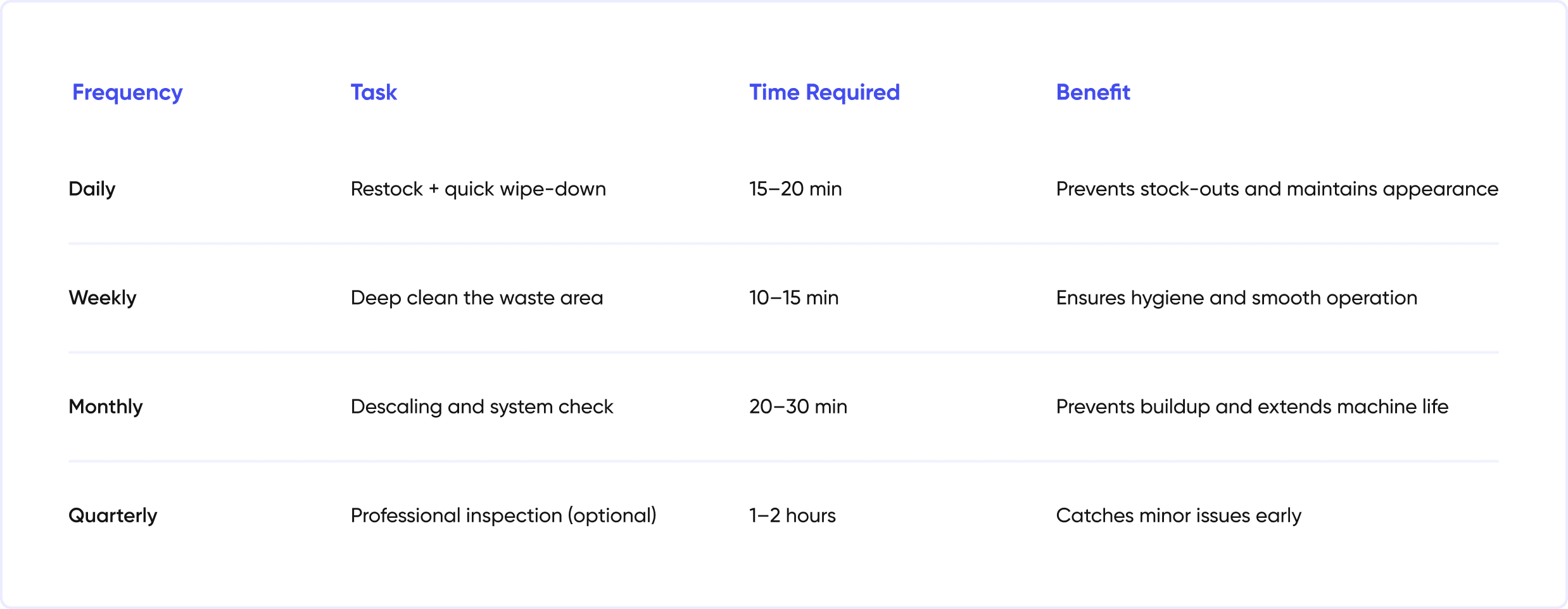
This simple schedule keeps the majority of machines running at peak performance with very low owner time commitment.
Frequently Asked Questions
How much time does daily maintenance actually take?
Most owners complete daily upkeep in 15–25 minutes, thanks to predictive alerts and efficient machine design.
What is the biggest cause of downtime?
Low supplies and minor sensor alerts are the most common issues — both easily prevented with routine checks and app notifications.
How often do professional technicians need to visit?
In well-maintained systems, technician visits are rare — typically once or twice per year for deeper servicing.
Can maintenance be managed remotely for multiple machines?Yes. Centralized remote monitoring allows you to oversee several locations efficiently from a single dashboard.