Back

What Investors at North America's Biggest Business Expo Were Really Looking For in 2026
At the 2026 International Franchise Expo in New York, serious investors had one clear focus: no staff, low overhead, real margins. Here's what the market is telling us.
Every year, the International Franchise Expo (IFE) at the Jacob K. Javits Convention Center in New York City draws thousands of entrepreneurs, investors, and business operators from all 50 US states and over 60 countries. These are not casual browsers. They are people who have made a deliberate decision to travel to one of the world's most competitive business cities, spend two days on an expo floor, and identify an opportunity serious enough to act on.
When the Touch Coffee team set up their booth at the 2026 IFE, we were not just there to showcase the Smart Bar. We were there to listen. And what we heard from investor after investor - across two full days of conversations - painted a very clear picture of what serious capital is looking for in 2026.
The answer was not complicated. Investors wanted no staff, low overhead, B2B location partnerships, and real margins. They wanted a business that generates recurring revenue without consuming their time. They wanted proof, not projections. And they wanted to understand it in minutes, not months.
This is what we learned - and what it reveals about where the smart money is moving right now.
Understanding the Room: Who Attends the IFE
Before drawing conclusions from what investors said at the IFE, it is worth understanding who they are. The International Franchise Expo is organized by MFV Expositions and has been held annually at the Javits Center for decades. The 2026 edition brought together 200+ exhibiting brands, 50+ educational workshops, and an audience of serious capital allocators from across North America and beyond.
Attendees at the IFE are not first-time investors exploring possibilities. They are entrepreneurs who have already built or operated businesses, professionals looking to diversify income, and capital holders who understand ROI, payback periods, and operating margins. They ask hard questions. They compare models side by side. And they walk away from anything that cannot demonstrate a clear, verifiable financial case.
From our experience at the 2026 show, the investor profile at the IFE breaks down into three distinct categories:
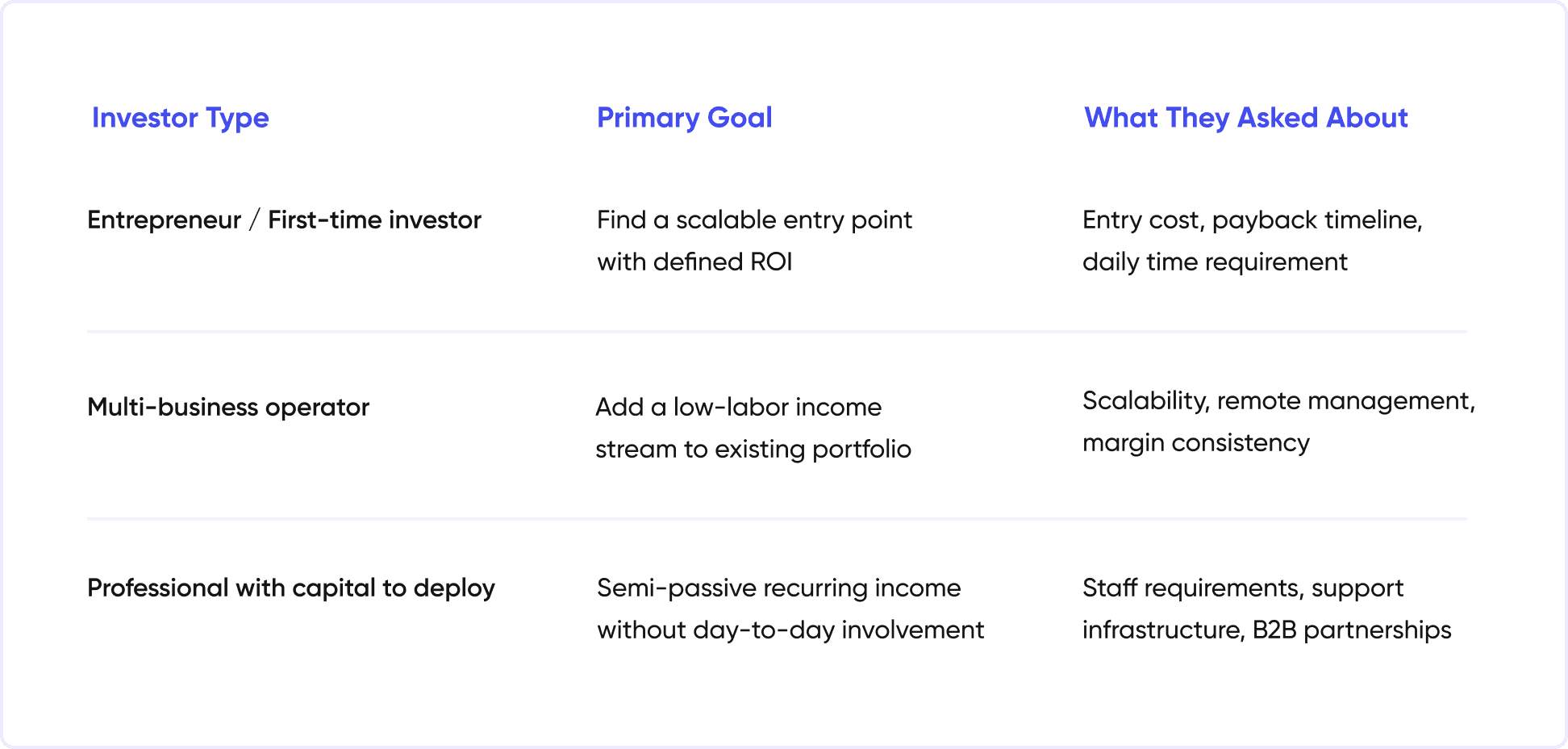
All three profiles arrived at the Touch Coffee booth with the same underlying question: can this model deliver real returns without consuming real time?
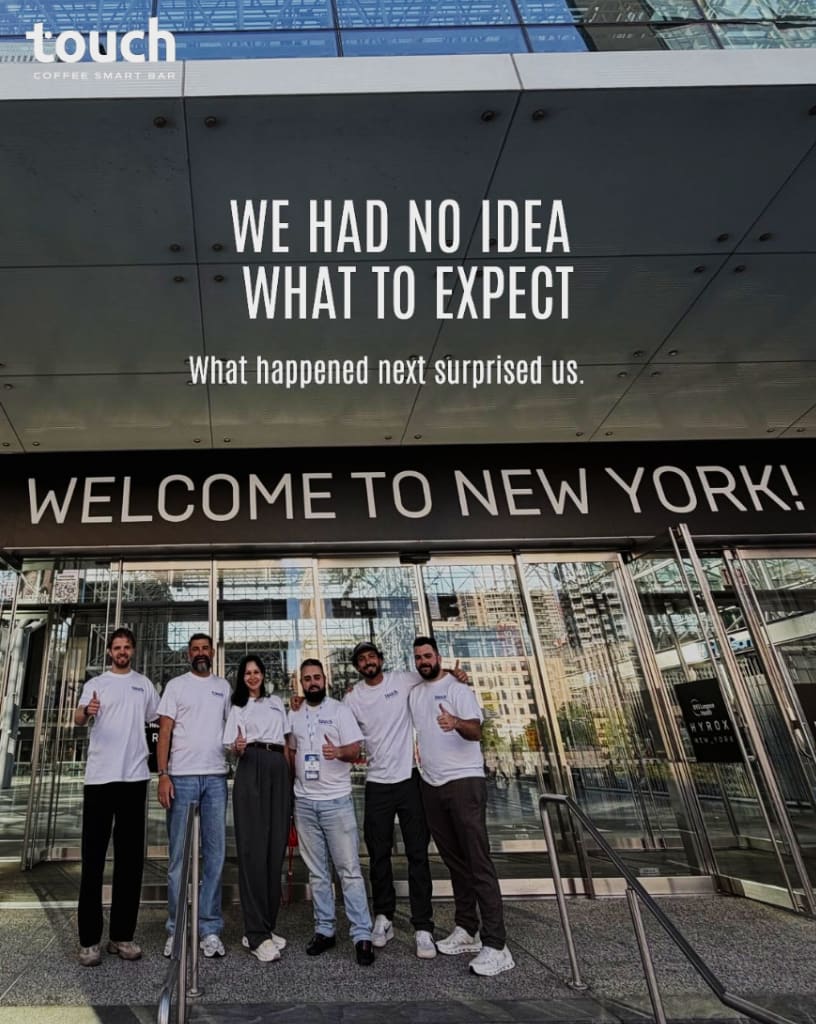
The Touch Coffee team entering the Javits Center, New York - ready to meet thousands of investors
The Questions Investors Were Actually Asking in 2026
Within minutes of the expo opening, it became clear that the investors walking the IFE floor in 2026 were not looking for the same things investors were looking for five years ago. The priorities had shifted - and shifted decisively.
Here are the five questions we heard most consistently, and what each one reveals about where serious investor mindset is in 2026.
1. "How Many Staff Does This Require?"
This was the first question from almost every investor who stopped at the Touch Coffee booth - and the answer stopped them in their tracks. Zero. No baristas, no shift supervisors, no HR management, no payroll administration. The machine operates autonomously around the clock, with the owner spending approximately 20 minutes per day on restocking and basic checks.
The labour question reflects a broader market reality. According to the TouchBistro 2026 Canadian State of Restaurants Report, 79% of food and beverage operators report ongoing staffing gaps. In the US, the National Restaurant Association has flagged labour availability as the primary operational concern for operators in 2025 and 2026. Investors have absorbed this reality - and they are actively seeking models that sidestep it entirely.
2. "What Is the Real Payback Period?"
Investors at the IFE were not interested in theoretical projections. They wanted verifiable data from live locations. The Touch Coffee answer - a payback period of approximately five months at moderate volume from a CA$17,000 entry investment - drew consistent interest, particularly when supported by operational data from 300+ live locations across Canada and the United States.
For context, the global vending machine market - of which automated coffee bars represent a premium segment - is projected to grow from USD $79.23 billion in 2026 to $105.59 billion by 2034 according to Fortune Business Insights. Smart beverage systems are among the fastest-growing subsegments. Investors at the IFE understood that entering this market now, with a proven operational model, is a fundamentally different proposition from speculating on an unproven concept.
3. "How Does the Location Partnership Work?"
The B2B location model was one of the most frequently discussed elements at our booth. Investors wanted to understand how a Touch Coffee Smart Bar gets placed in a hospital, university, corporate office, or shopping mall - and what the ongoing commercial relationship looks like.
The answer - that Touch Coffee provides location support, that venue partners benefit from offering a premium coffee amenity at no operational cost to themselves, and that the machine owner retains the revenue - resonated strongly with investors who had experience in commercial real estate, hospitality, or institutional services. They understood the value of a B2B placement agreement with an institution versus a consumer-facing retail lease. Stability, credibility, and long-term positioning in one conversation.
4. "What Do the Real Margins Look Like?"
Investors at the IFE level do not accept marketing copy as a substitute for financial data. We presented the unit economics directly: a selling price of CA$4.00 per drink, a cost per drink of CA$1.50, and a net profit per cup of CA$2.50. At 50 cups per day, that is CA$3,750 per month in net income per unit. At 70 cups per day - achievable in high-traffic institutional venues - that rises to CA$5,250 per month.
For investors familiar with traditional food and beverage margins of 5–15%, these numbers required verification - which is exactly why having real revenue data from live locations matters. The figures are not projections. They are operational benchmarks from a deployed network.
5. "Can I Run Multiple Units?"
The scalability question came consistently from investors who were already mentally past the first unit. They wanted to know whether the management overhead scales proportionally with the number of units - and whether the model supports genuine portfolio building.
The answer - that each additional unit follows the same operational template, is monitored through the same remote dashboard, and requires the same ~20 minutes of daily attention - is exactly what serious investors want to hear. Five units means five revenue streams, not five times the management complexity.
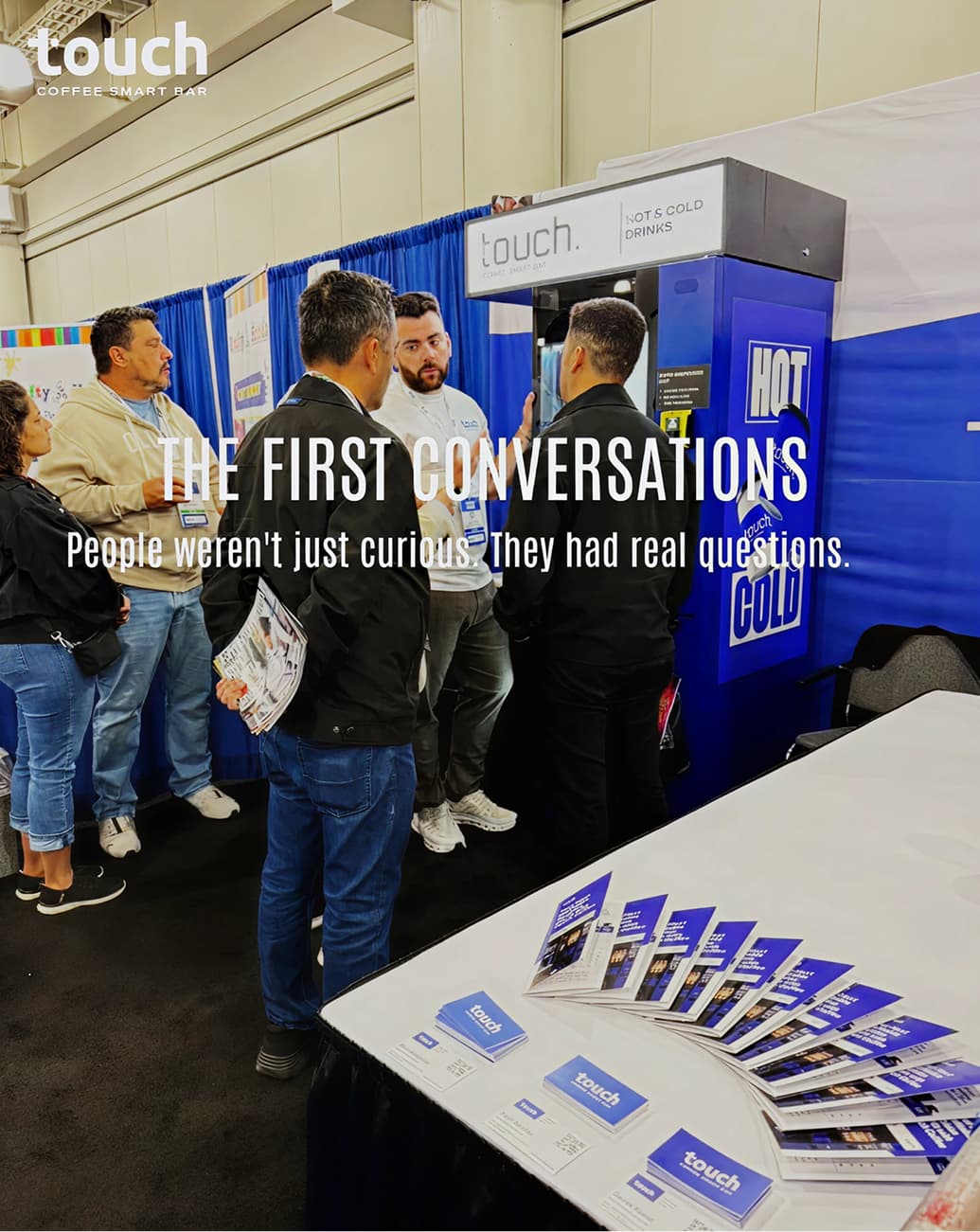
Real investor conversations at the Touch Coffee booth - deep questions, serious interest
What the Market Is Asking For Right Now
The pattern that emerged from two days of investor conversations at the IFE 2026 is consistent with broader market data on where serious capital is moving in North America.
The intelligent vending machine sector - which includes premium automated coffee bars - is projected to reach USD $17.7 billion in 2026 and grow to USD $53.2 billion by 2036 at an 11.6% CAGR, according to Future Market Insights. North America's smart vending segment is growing at an estimated 10–13% CAGR, driven specifically by labour shortage pressures and the rise of unattended micro-retail in institutional environments.
Investors at the IFE were not reacting to hype. They were responding to a structural shift in the market that they could see, touch, and evaluate in real time at our booth. The automated coffee bar represents:
A defined entry cost - CA$17,000, transparent and verifiable
A short payback period - approximately five months at moderate volume
Zero labour dependency - no staff, no HR, no scheduling
Institutional placement security - B2B venue agreements with hospitals, universities, and corporate campuses
Remote management capability - full oversight via mobile dashboard from anywhere
Genuine scalability - each new unit is a new income stream without proportional management growth
These are not features. They are the exact answers to the exact questions the IFE investor room was asking.
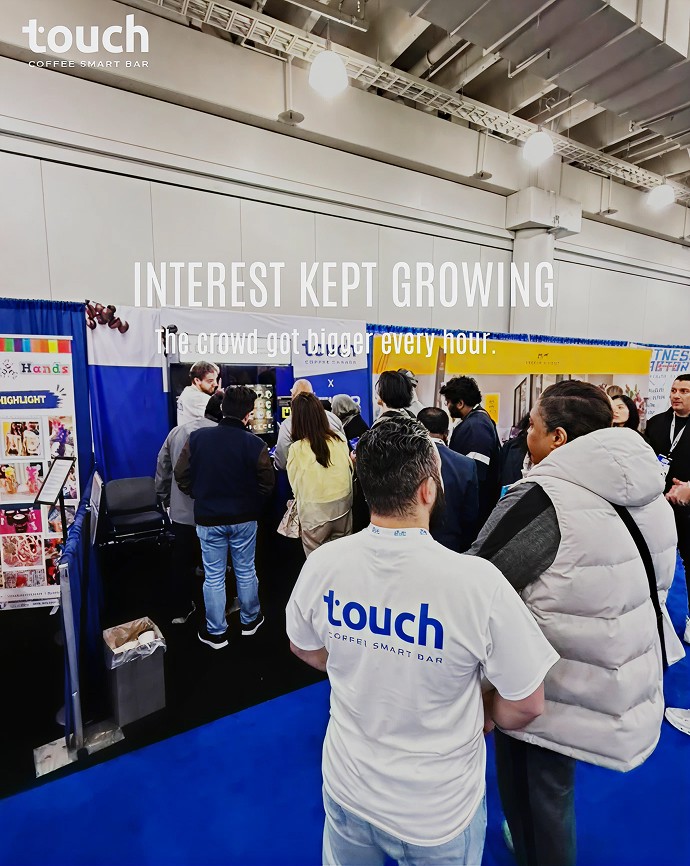
Growing crowds at the Touch Coffee booth - every hour brought more serious investor conversations
Why the Automated Coffee Bar Specifically - Not Just Any Unattended Retail
A fair question from any serious investor is: why coffee specifically, within the broader unattended retail category?
The answer lies in demand consistency. The Coffee Association of Canada's 2025 research confirms that coffee outranks even tap water in daily Canadian consumption - with 71% of Canadians reporting they drank coffee the previous day. In the United States, the National Coffee Association reports that 67% of Americans drink coffee daily, with per capita consumption averaging 3.1 cups per day.
Coffee is not a discretionary purchase that fluctuates with economic sentiment. It is a daily habit embedded in workplace culture, campus life, and healthcare environments. Placing a premium automated coffee bar in a hospital, university, or corporate office is not betting on a trend - it is serving a guaranteed, repeating daily demand from a captive audience.
That combination - reliable demand, premium product positioning, unattended operation, and institutional placement - is precisely why the Touch Coffee Smart Bar generated the level of investor interest it did at the IFE. It is not simply an automated machine. It is a business asset positioned at the intersection of several converging market forces.
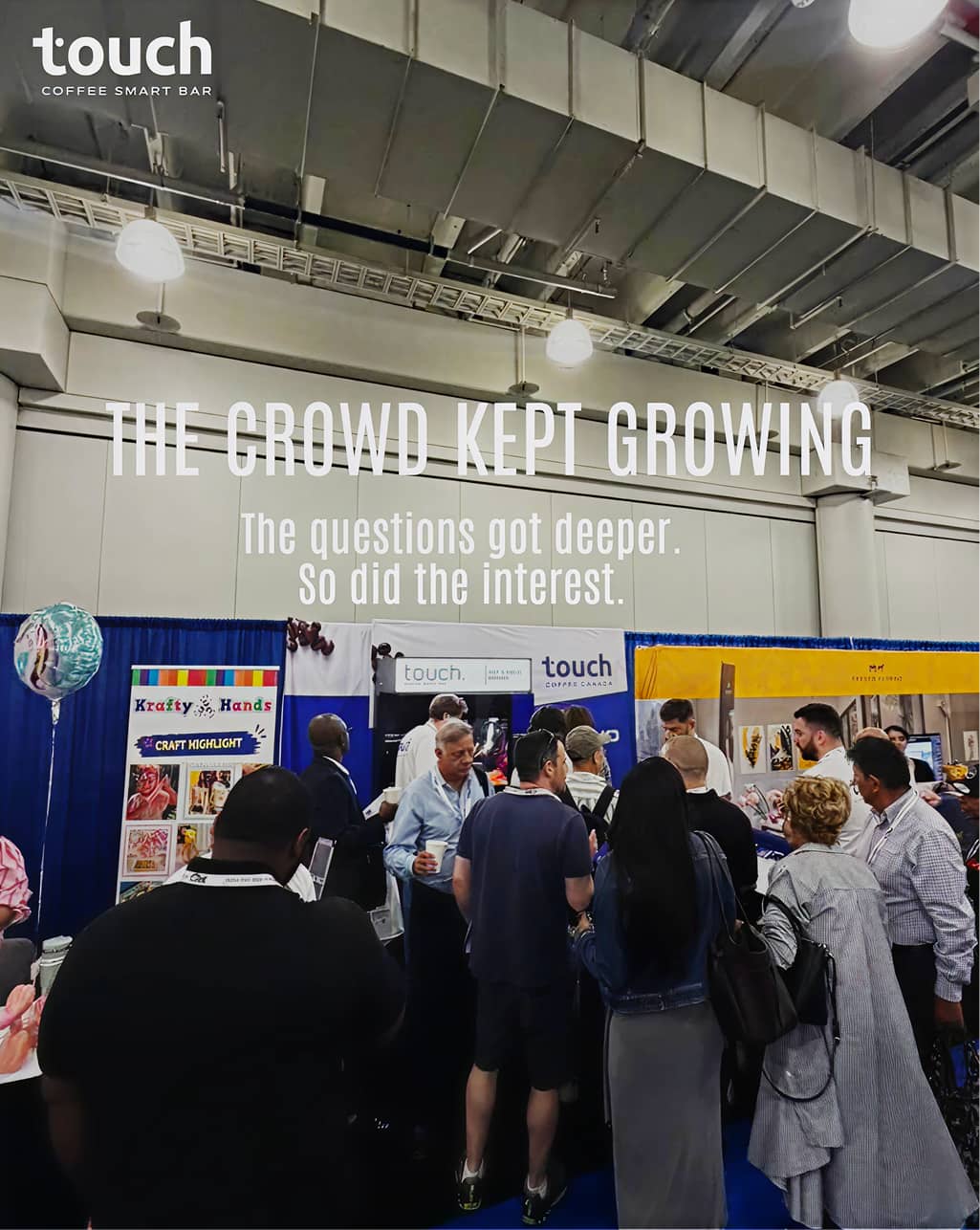
The crowd at the Touch Coffee booth kept growing - the questions got deeper every hour
What This Means for Investors Evaluating the Market Right Now
The IFE 2026 was not just a showcase event for Touch Coffee. It was a real-time market signal - a two-day window into how North America's most serious investors are thinking about business opportunity in the current environment.
What we saw was investors who have moved past the question of whether automation in food and beverage is viable - that debate is settled. They are now asking which specific model, which specific operator, and which specific entry point represents the strongest opportunity for their capital.
For investors who are currently asking those same questions, the starting point is the same one thousands of IFE attendees found themselves at by the end of our two-day booth: a conversation with the Touch Coffee team about target market, location strategy, and realistic revenue expectations.

Touch Coffee became the busiest booth at the 2026 IFE - the market voted with its attention
The Opportunity Is Open - For Now
The automated coffee bar category in North America is in an early-growth phase. The infrastructure is proven. The demand is structural. The operational model is validated across 300+ live locations. The investor interest - confirmed in front of thousands of the most serious buyers in North America at the IFE - is real.
Early movers in high-value institutional venues - hospitals, universities, government buildings, corporate campuses, and transit hubs - establish positioning that compounds in value over time. That positioning becomes harder to access as the category matures and competition for premium locations increases.
The investors who walked away from the Touch Coffee booth at the IFE 2026 with the most conviction were not the ones who needed the most convincing. They were the ones who arrived with the right questions - and found answers they could act on.
Start your conversation with Touch Coffee today. The team is available to walk through your market, your target locations, and your investment timeline - and to show you exactly what the model delivers in your specific context.
The market told us clearly what it wants at the IFE 2026. The question now is whether you are ready to meet it.