Back

5 Things We Learned Facing Thousands of Investors in New York
Touch Coffee exhibited at the biggest business expo in North America. Here are 5 honest market lessons every serious automated coffee bar investor needs to know in 2026.
There are things you can only learn by doing. You can study a market. You can analyse data. You can run projections and build models and speak with individual investors one at a time. But nothing compares to setting up a booth at the International Franchise Expo (IFE) in New York City - North America's largest business opportunity expo - and putting your model in front of thousands of serious investors across two consecutive days.
That is what the Touch Coffee team did at the 2026 IFE at the Jacob K. Javits Convention Center. We walked in uncertainly. We walked out with five lessons that have shaped how we think about the automated coffee bar market, our investors, and the opportunity ahead.
These are not polished talking points. They are honest observations from the floor - and every one of them matters for investors evaluating this space in 2026.
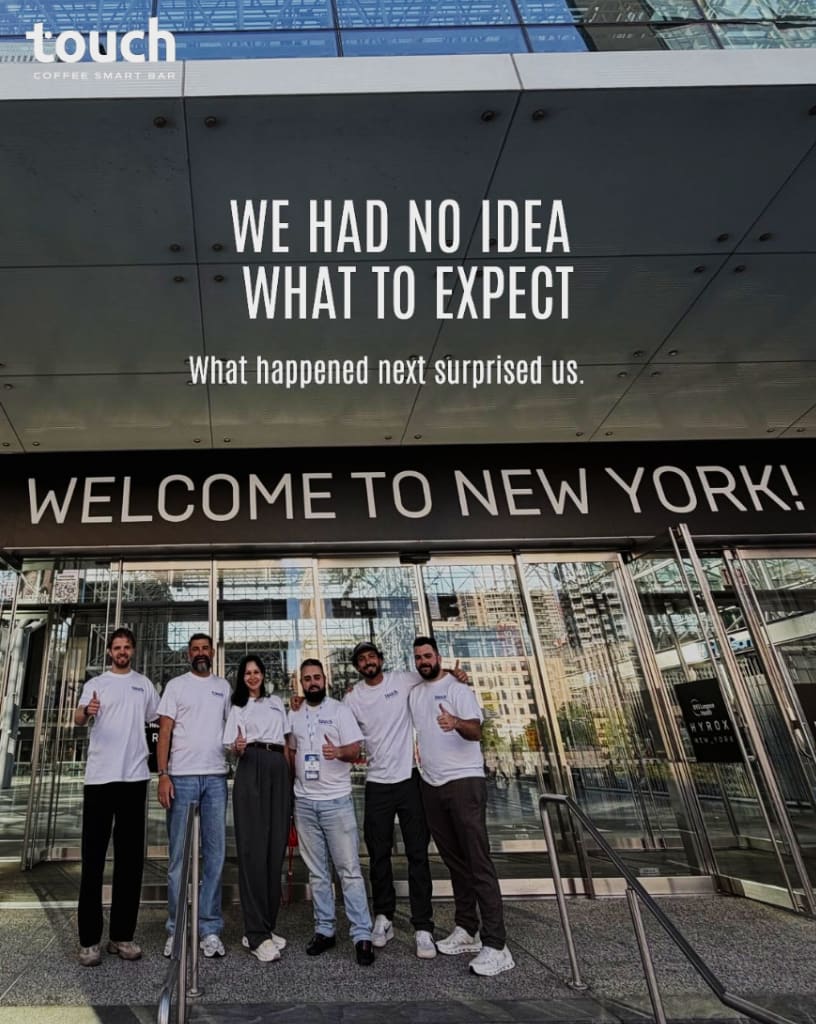
Arriving at the Javits Center, New York - the Touch Coffee team ready to face the market
Lesson 1: The Machine Sells Itself - But Only When People Can See It
Before New York, we knew live demonstration was important. After New York, we understand it is the single most powerful conversion tool in the entire business model.
The IFE floor was full of opportunities presented through brochures, screens, and pitch decks. Investors walked past hundreds of these presentations with the practiced indifference of people who have seen them all before. Then they reached the Touch Coffee booth - where a fully operational Smart Bar was pulling espresso shots, processing contactless payments, and running its automated cleaning cycle in real time - and they stopped.
Not because it looked interesting. Because it looked impossible. A commercial-grade automated coffee bar, producing premium beverages, managing itself, taking payments, logging every transaction - all without a single member of staff. In a room full of business concepts, this was a business reality that investors could watch working in front of them.
The lesson for investors is the inverse of what you might expect. The question is not how hard the machine is to understand - it is how immediately it is understood. When venue managers, property operators, and institutional facilities contacts see the Smart Bar in person, the conversation about placement accelerates dramatically. This is why location visits and live demonstrations - not brochures or videos - are the primary sales tool for securing the best institutional placements.
It is also why the Touch Coffee partner support model includes social media features and Google Maps listings for each location - because visibility drives the same kind of instant comprehension that we saw on the IFE floor, deployed digitally at every placement site.
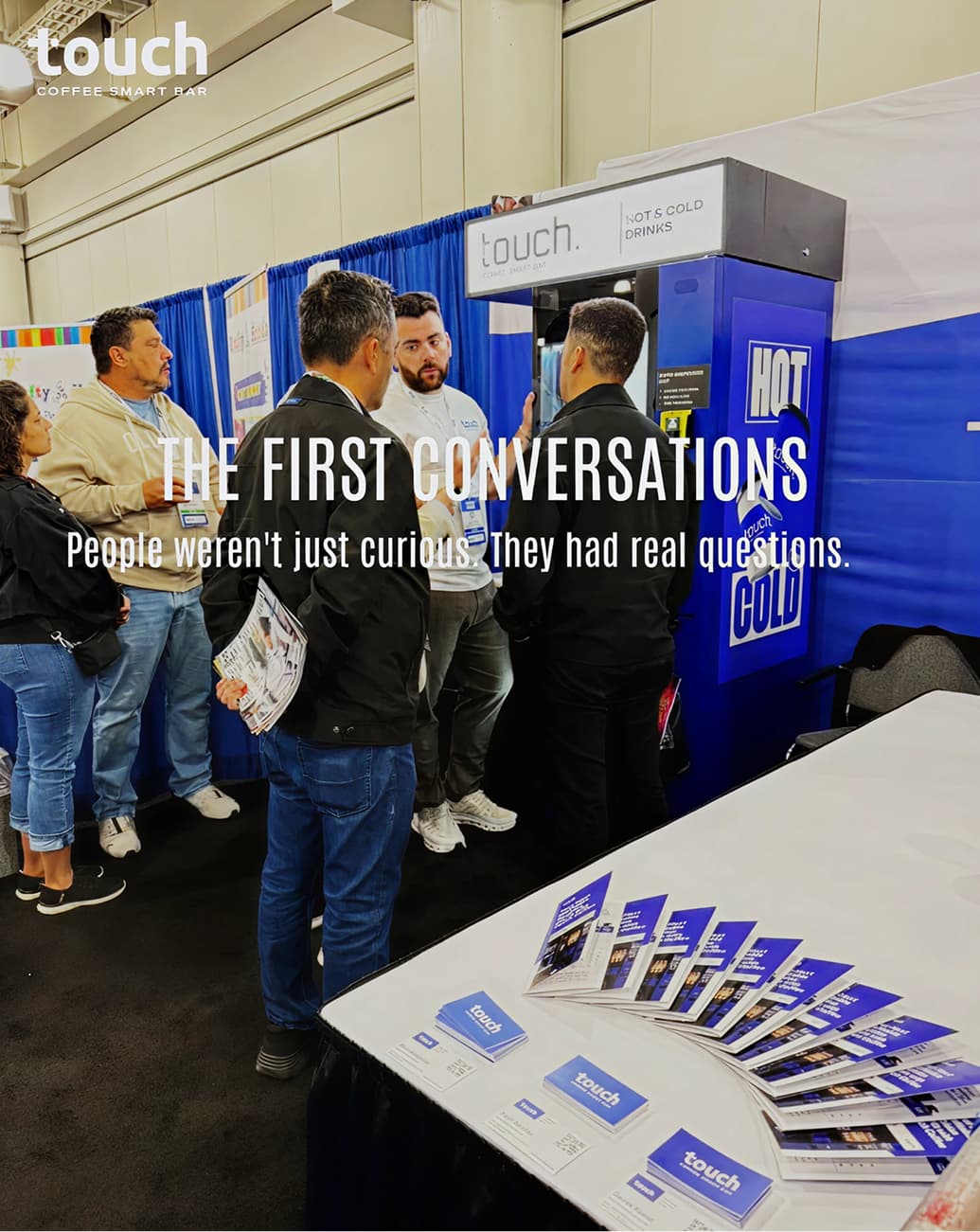
The first conversations at the Touch Coffee booth - investors reacted immediately to the live machine
Lesson 2: Serious Investors Ask About the Model First - Not the Product
We expected investors to ask about coffee quality, drink varieties, machine specifications, and aesthetics. Some did. But the investors who stayed longest and asked the most questions were focused on something else entirely: the business model structure.
These were the questions that defined the serious conversations:
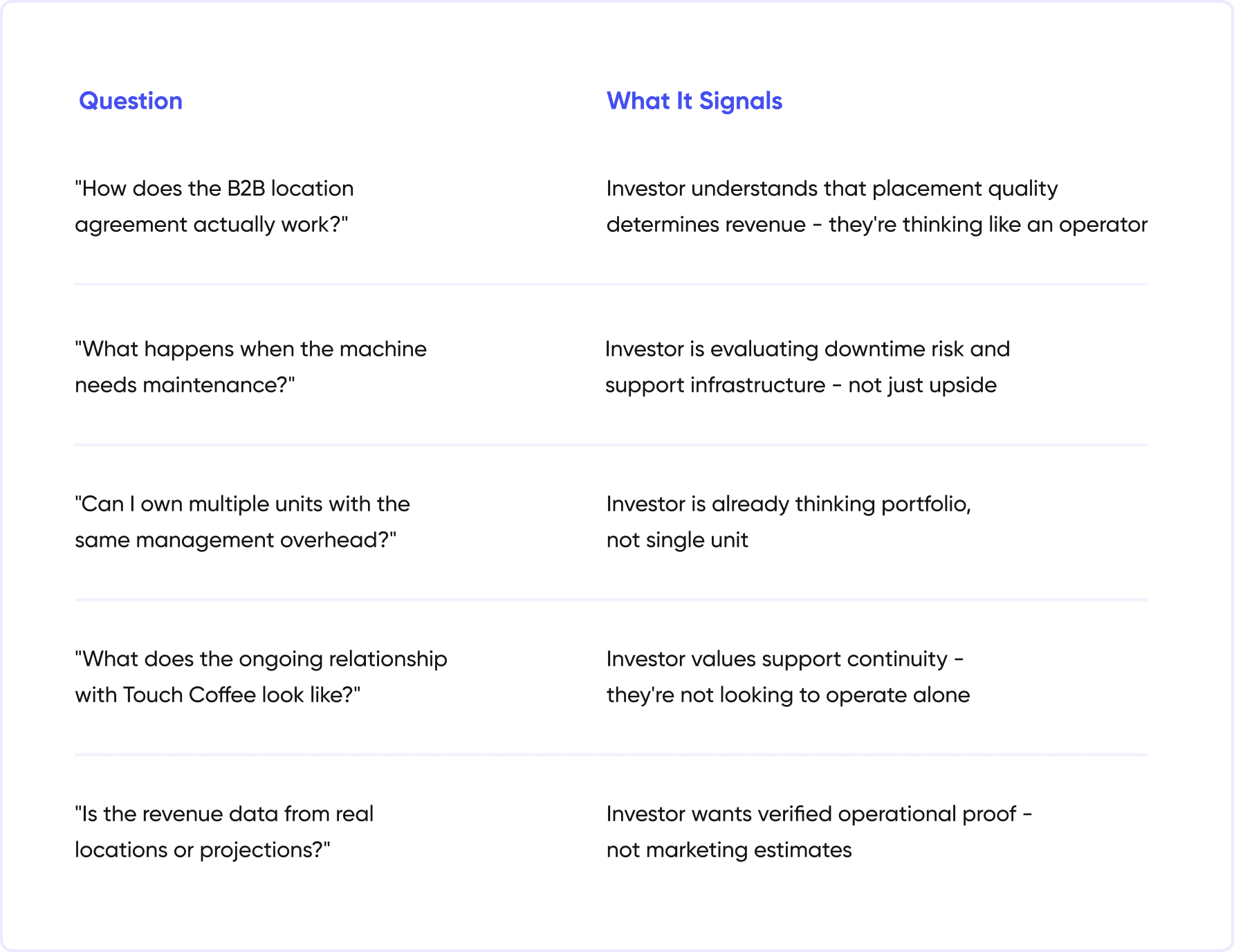
Every one of these questions reflects an investor who has moved past curiosity and into due diligence. They are not asking about the coffee - they are asking about the asset. The automated coffee bar is not a product to them. It is a recurring revenue vehicle that they are evaluating with the same rigour they would apply to any other capital allocation decision.
For investors at this stage, the answers that mattered were the same ones that have driven the Touch Coffee network to 300+ live locations across Canada and the United States: transparent unit economics, a defined support model, real operational data, and a scalability structure that does not require proportional management growth.
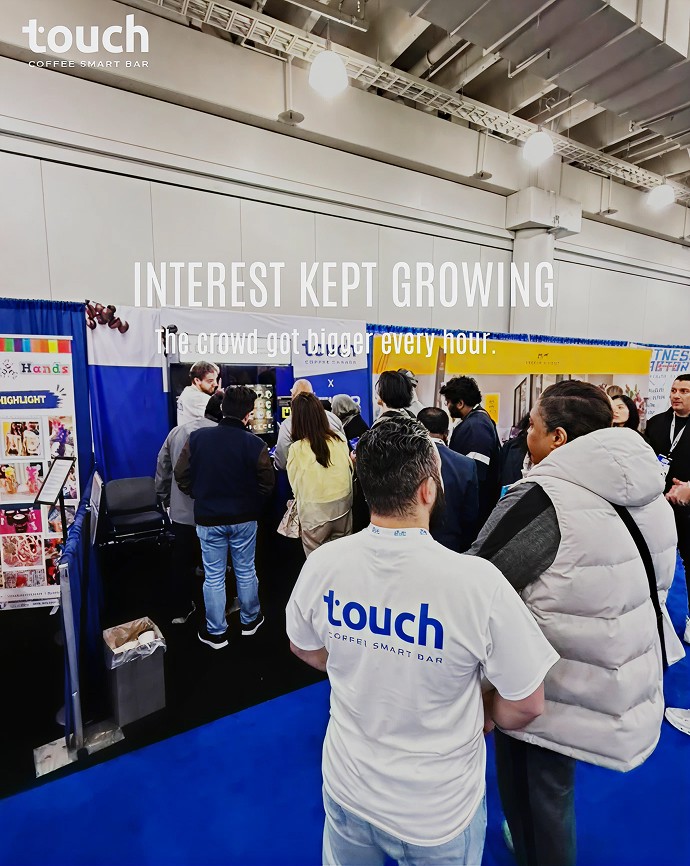
Growing crowds at the Touch Coffee booth - interest built steadily through the first day
Lesson 3: The Staffing Crisis Has Changed What Investors Consider Viable
Two years ago, the zero-staff operating model of the Touch Coffee Smart Bar was a competitive advantage. At the 2026 IFE, it had become something more significant: a baseline requirement for a large proportion of serious investors.
The labour environment in North America in 2026 is fundamentally different from what it was pre-pandemic. The National Restaurant Association has flagged staffing availability as the primary operational concern for US food service operators. The TouchBistro 2026 Canadian State of Restaurants Report found that 79% of Canadian food and beverage operators report ongoing staffing gaps. Rising minimum wages across multiple US states have compressed margins in labour-dependent hospitality models to the point where many investors are actively ruling them out.
At the IFE, this translated into a specific pattern. When we explained that the Touch Coffee Smart Bar requires zero staff - no scheduling, no payroll, no recruitment cycles, no sick day cover - the response was not surprise. It was relief. Investors were not learning about a novel feature. They were finding the answer to a problem they had already identified as disqualifying for most other opportunities on the floor.
The lesson here is structural. The labour crisis has not just created a market opening for automated retail - it has permanently shifted investor evaluation criteria. Any business opportunity that requires consistent staffing now carries a risk premium that did not exist five years ago. Any opportunity that eliminates that risk entirely - as the automated coffee bar does - carries a corresponding advantage that grows as the labour environment tightens further.
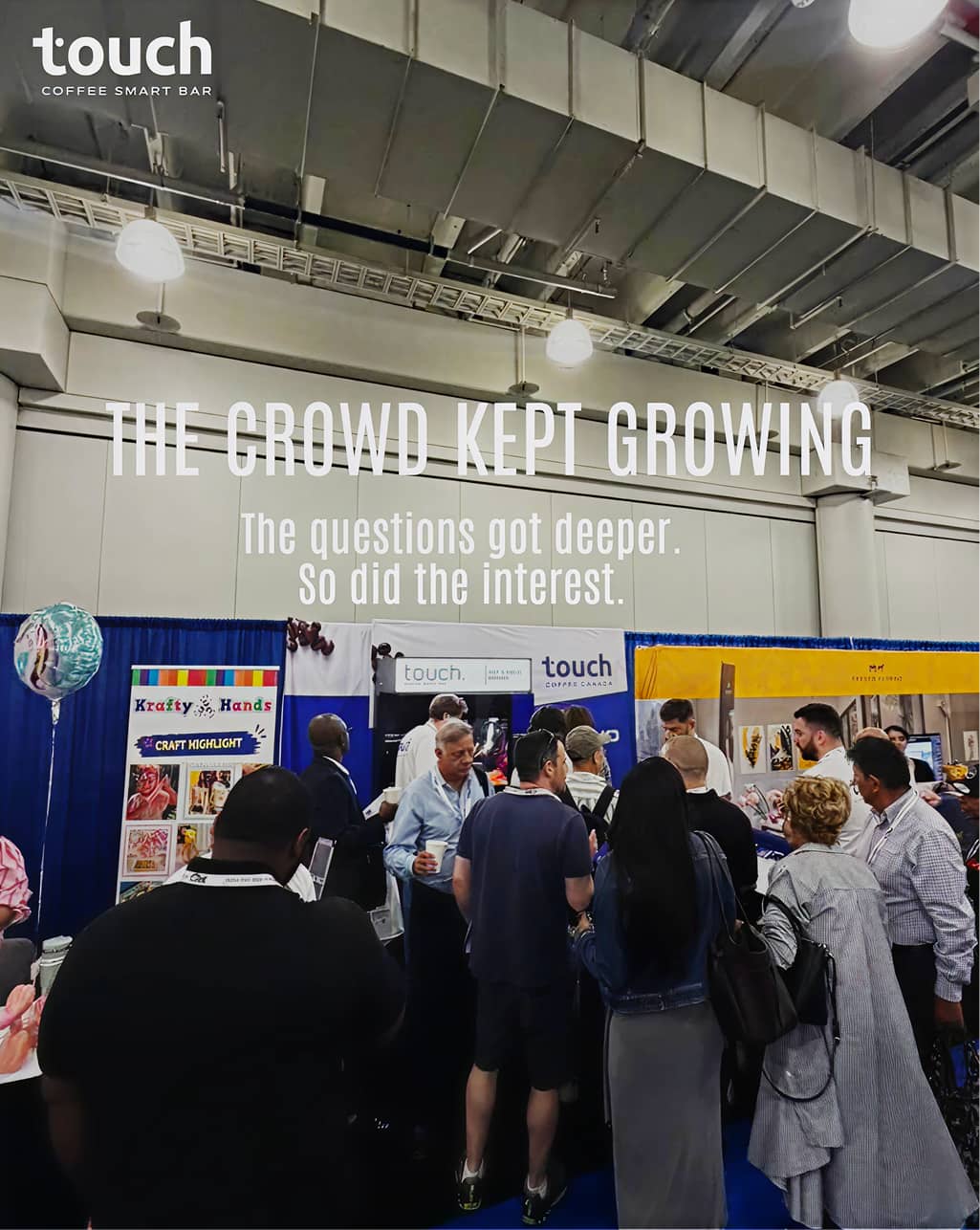
The crowd at the Touch Coffee IFE booth kept growing - the staffing-free model drew sustained attention
Lesson 4: Location Is Everything - And Investors Know It
Of all the questions at the IFE, the ones about location strategy were the most revealing. Investors were not simply asking where to put the machine. They were asking how to identify, approach, and secure the right institutional venue - and what the difference in revenue looks like between a well-chosen and poorly chosen location.
From our experience across 300+ operational locations, the data on this is clear. A Smart Bar placed in a high-traffic hospital with strong shift-worker demand and 24/7 access generates a fundamentally different revenue profile from a unit placed in a low-footfall office with 9-to-5 hours and irregular attendance. Both can be profitable. But the gap in performance between an optimal and a suboptimal placement is significant - and sophisticated investors at the IFE understood this immediately.
The questions we heard most on this topic:
"What venue categories generate the highest and most consistent volume?"
"How do I approach a hospital or university about placing a unit?"
"What does a good venue agreement look like - and what should I watch out for?"
"Does Touch Coffee help with location sourcing, or is that entirely on the investor?"
These questions reflect investors who understand that the machine is the asset - but the location is the performance multiplier. A CA$17,000 Smart Bar in the right hospital corridor or university building can return its entire investment in five months. In the wrong location, the same machine underperforms.
This is precisely why the Touch Coffee partner model includes active location support. For investors who want to understand how venue selection works across the existing network, our detailed breakdown of best locations for a smart coffee bar covers the decision framework used across 300+ operational deployments.

Touch Coffee became the busiest booth at the entire IFE 2026 - location expertise drove investor confidence
Lesson 5: The Market Window Is Real - And It Is Not Going to Stay Open
This is the lesson that surprised us most - not because we did not believe it, but because of how clearly it was reflected in investor behaviour on the IFE floor.
At a trade expo, most conversations follow a predictable arc: interest, questions, a business card exchange, and a promise to follow up. Many of those follow-ups never materialise. The investor moves to the next booth, the next opportunity, the next meeting - and the moment passes.
At the Touch Coffee booth, the arc was different. Investors who came back for second conversations. Investors who brought colleagues and introduced them mid-discussion. Investors who asked directly: "What does the timeline look like to get started?" That is not typical expo behaviour. That is the behaviour of people who recognise a window and do not want to miss it.
The market data supports the urgency. The intelligent vending machine sector is growing at an 11.6% CAGR through 2036. North America's automated coffee segment is expanding at 10–13% annually. The US coffee market - at 507 million cups consumed daily - is the largest in the world and structurally underserved by automated premium coffee solutions at the institutional level.
Early movers in high-value institutional venues - hospitals, universities, government buildings, corporate campuses, and transit hubs - are establishing placements now that will be significantly harder to access as the category matures and competition for premium locations increases. The investors who moved fastest at the IFE were the ones who already understood this. They were not waiting for more proof. The proof was standing in front of them, serving coffee.
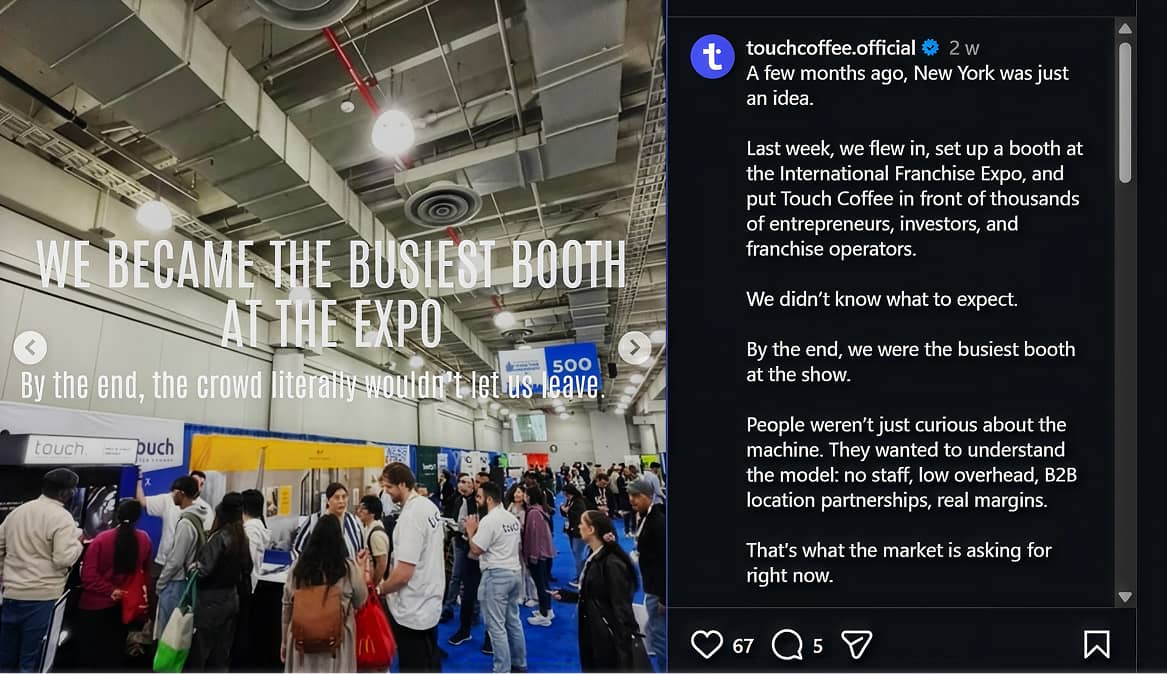
Touch Coffee after the 2026 IFE - five lessons, one clear market signal (@touchcoffee.official)
What These Five Lessons Mean for Investors in 2026
The IFE taught us things we could not have learned any other way. But what matters is not what we learned - it is what these lessons mean for investors evaluating the automated coffee bar opportunity right now.
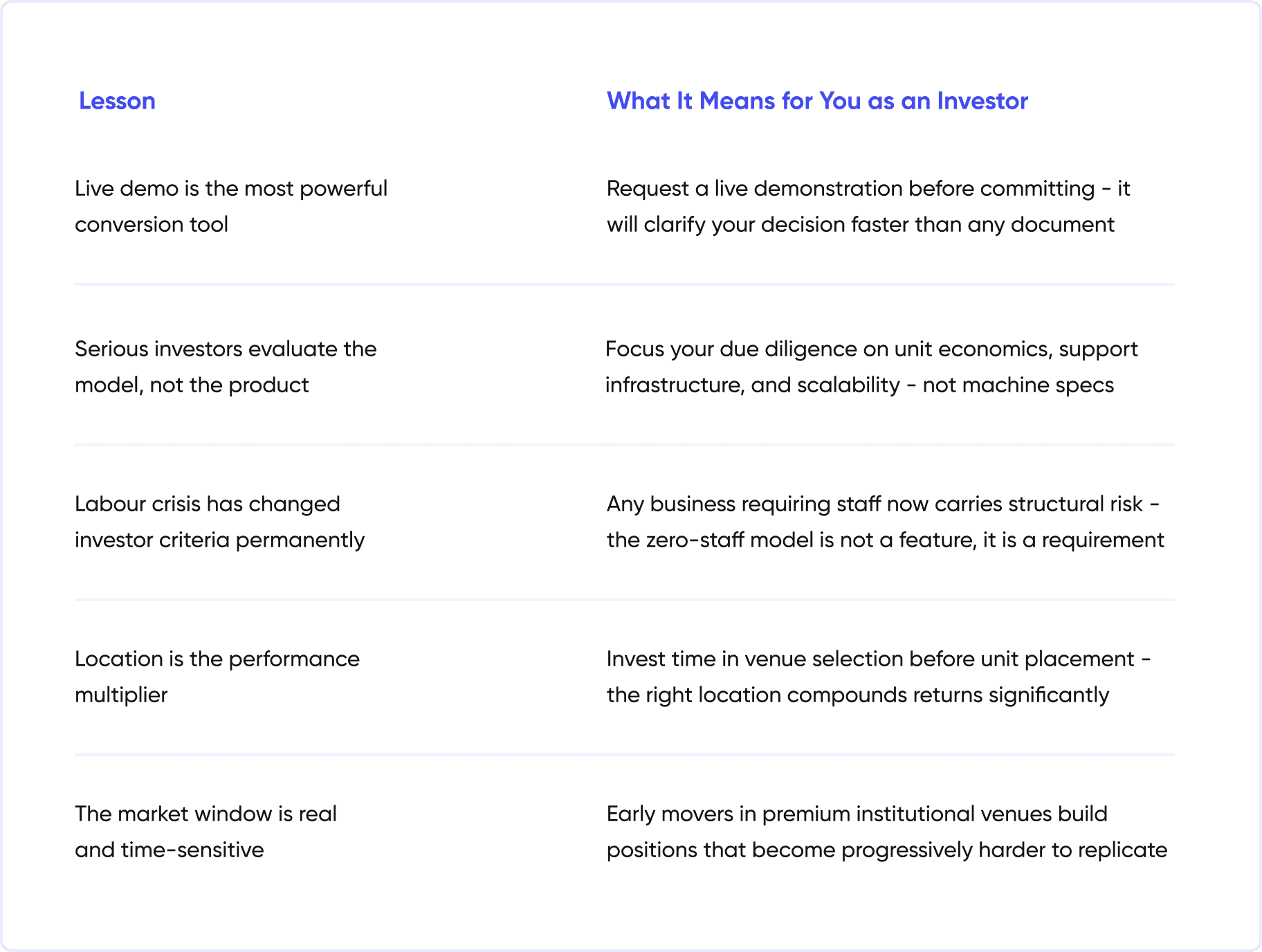
The Next Step Is a Conversation
The five lessons from New York are not abstract observations. They are the direct output of two days of unscripted, high-stakes investor conversations at the most competitive business opportunity environment in North America.
If you are a serious investor evaluating the automated coffee bar market in Canada or the United States, the starting point is the same one thousands of IFE attendees found at the Touch Coffee booth: a direct conversation about your market, your location options, and what a realistic revenue timeline looks like for your specific situation.
Touch Coffee's partner model is built for investors who ask the right questions - about the model, the margins, the locations, and the support. The team is ready to answer every one of them.
Start the conversation at touch-coffee.com. Bring your questions. We have been answering them for two days straight in New York - and we are ready to answer yours.
The market told us clearly what it wants at the IFE 2026. The question now is whether you are ready to be part of it.
Start with Touch Coffee Today →